Fuel costs and supply in Australia: when will fuel prices drop? Your questions answered

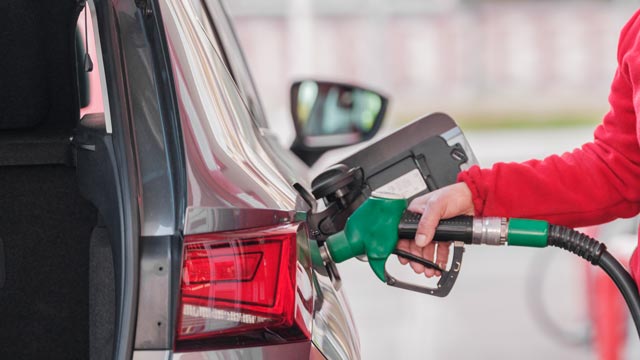
With unrest in the Middle East and fuel prices soaring above $2.50 a litre, some motorists have been panic-buying petrol, fearing the situation will get worse.
Is Australia’s fuel supply under serious threat or are people overreacting to doomsayers in the media? Open Road speaks to the experts to sort fact from fiction and provide answers to the most pressing questions around a potential Australian fuel crisis.
As an NRMA member you can save up to 13 cents per litre every time you fill up at participating Ampol Foodary locations. Simply download the My NRMA app and show the QR code when you pay to receive your member discount.
Today's key updates
The current average price for regular unleaded fuel in Sydney is 218.3 cents per litre (Tueday morning). NRMA's latest weekly fuel report showed this price has fallen 8.3 cents per litre this past week. The global benchmark Gasoil price continues to be quite volatile.
Future unleaded and diesel price movements will depend on what happens to terminal gate prices going forward. The outlook for diesel prices remains uncertain. Prices are being impacted by the following factors:
- The US-Israel war with Iran and geopolitical tensions in the Middle East.
- The tentative ceasefire and the failed peace talks in Pakistan
- The ongoing Russian-Ukraine peace deal negotiations.
- Rising US oil inventory stock levels.
Impact of refinery blaze won't be known straight away
Federal Energy Minister Chris Bowen has admitted an accidental fire at a Geelong oil refinery is likely to impact local production in Australia "for some time", however the jury remains out on whether it will affect pricing or supply at the bowser.
A section of the Viva Energy-owned refinery went up in flames just after 11pm on Wednesday, the company has confirmed. The fire occurred in a unit that transforms LPG to gasoline components, according to Viva Energy chief executive Scott Wyatt.
With that said, Wyatt confirmed other areas of the facility dedicated to petrol production remain unaffected.
"We'll only start increasing production again once we're confident that we can do that safely," he said.
"We'll obviously have to do it without these two units in operation and we'll work through how we do that over the next couple of days and get back to the highest level of production we can across the site."
The Geelong site is continuing to produce diesel and jet fuel "at reduced levels" due to safety precautions, Bowen told the ABC.
"At this point, production of diesel and jet fuel continues and [there is] no reason to believe at this point that it will stop that," he said.
The Viva refinery, along with an Ampol-owned Lytton refinery in Brisbane each provide about 10 per cent of Australia's fuel, with the remainder of the country's petrol, diesel and jet fuel imported from overseas.
Open Road has reached out to industry officials for further comment.
Two week ceasefire announced on 8 April
On 8 April, a two week ceasefire between the US and Iran was announced. In hopes that transit through the key Strait of Hormuz could resume, the price of Brent crude fell by up to 17 per cent before trading near $US95 a barrel. Should the ceasefire hold, lower prices should continue through to the Asian markets, leading to lower wholesale prices here in Australia.
Ceasefire negotiations between the US and Iran took place over the second weekend of April and failed to conclude in a formal deal, leaving the agreement dependent of continued compliance by both sides. As of 13 April 2026, US president Donald Trump initiated US warships to blockafde the Strait of Hormuz in a high-stakes military action to cut off Iran’s maritime trade. Upon the announcement, crude oil prices surged back above $100 a barrel.
Fuel excise halved for three months
On Monday 30 March Anthony Albanese announced that following a National Cabinet meeting, the fuel excise will be halved for a period of three months. This will bring the price of fuel down by 26.3 per cents per litre (cpl), reducing the cost of a 50 litre tank by $13 and an 80 litre tank by $21.
Average regular unleaded prices in NSW were at 250.8 cpl on Monday 30 March. Prices are expected to fall from Wednesday 1 April by 26.3 cpl – due to the Federal Government's announcement to reduce the fuel excise for three months. At 8:00am on Thursday 9 April, average unleaeded prices (Unleaded 91) were at 224.4c/l, 26.4 cents down from 30 March, with average E10 prices at 218.5c/l.
The Federal Government also reduced the Heavy Vehicle Road User Charge to zero for three months to take the pressure off the goods transport industry.
Is there a risk that service stations will not pass on the fuel excise cut?
The Australian Automobile Association (AAA) is concerned that the 26 cents per litre cut may not flow through to consumers and that under-pressure retailers could take advantage of the changing tax arrangements to boost retail margins
AAA Managing Director Michael Bradley said: “Every element of Australia’s fuel distribution and retail chain is under enormous pressure because of the conflict in the Middle East, which could motivate some to take a share of the tax cut, rather than pass it on in full."
The NRMA will continue to monitor prices across regional and metro and lobby the ACCC to assure motorists that savings are being passed on to consumers.
Will the NSW government introduce free public transport?
Although the Victorian and Tasmanian state governments have moved to introduce free public transport to ease the fuel crisis, so far the NSW government has not followed suit.
On Sunday 29 March the Rail, Tram and Bus Union (RTBU) NSW urged the government to give commuters free or reduced-cost access to public transport, with RTBU NSW Secretary Toby Warnes saying the NSW Government has a responsibility to take action to ease the cost-of-living pressure.
“Public transport fares are a lever the state government has complete control of. The NSW Government has already waited too long – they need to act now,” Mr Warnes said.
However, the NSW government is pushing back on the pressure to act, with NSW state treasurer Dan Mookhey calling it “an expensive decision”.
“It’s millions of dollars every single day,” NSW transport minister John Graham added. “This situation will last more than a month. We need to keep our powder dry to be able to assist the broader economy.”
Victorian commuters will have free access to public transport until the end of April, while Tasmanians can travel free until the end of June and Queenslanders have a permanent and heavily subsided system with a flat fare of 50 cents.
NRMA spokesman, Peter Khoury, pointed out that while public transport subsidies are great for people living in urban areas, they are in part funded by regional taxpayers who don’t get any benefit.
He added that while an NRMA survey showed 12 per cent of people intended to increase their public transport use due to the fuel crisis, so far there has been no real-world spike in train and bus journeys.
Are service stations running out of fuel – will rationing come into effect?
Australia has 30 days of diesel in reserve and has secured fuel shipments until May. However, a surge in demand means there are fuel stations around the country reporting shortages, with recent data showing over 550 outlets (total of 7798) are without at least one kind of fuel.
Earlier this month, the federal government said there was no need for petrol rationing and the NRMA supports this approach as fuel supply remains at pre-conflict levels. However, as a precaution, the government did not rule out the possibility entirely if worst-case scenarios occur. Emergency regulatory powers are available if required.
The governement has not publicly indicated a threshold for restricting fuel but the ABC reports that preliminary government analysis assumed rationing may come into affect if the national diesel stockpile dropped to 10 days' supply.
What are governments doing to address a fuel shortage?
State and federal governments are working together to manage the situation, including twice weekly meetings of the National Oil Security Emergency Committee. An ‘incident room’ has been set up to verify reported outages with service stations and create mapped locations of low or no fuel availability and storage facilities. Industry and both tiers of government will look to “identify and address distribution gaps”.
Is fuel still coming into Australia?
Yes, ships are still importing fuel into Australia. Federal energy minister Chris Bowen confirmed on Monday, March 23, that six ships carrying fuel bound for Australia have been deferred or cancelled due to the Iran conflict. The tankers represent a small fraction of the 81 that were scheduled to arrive in this country between mid-April and mid-May, however, and Mr Bowen told media Australia is still a “long way” from fuel rationing.
Large energy companies such as ExxonMobil, BP and Vitol have increased their volume of exports to Australia to compensate for the drop in supply from Asia, and ships are bypassing the Strait of Hormuz and accessing our region via a more costly route through the Gulf of Mexico.
On Monday, March 16, the NSW Government convened a fuel security round table with around 60 industry and stakeholder representatives to discuss fuel supply, pricing and impacts on businesses and communities, particularly regional NSW. NRMA represented our members at this round table.
The round table concluded that overall fuel supply remains adequate and the main problem is a surge in demand due to panic buying, which is particularly affecting regional businesses and essential services. If the conflict in Iran continues long-term, this could lead to a drop in supply.
I have a road trip planned – what should I do?
Governments, the NRMA and other economic experts have urged people to continue travelling to regional NSW, including over Easter and the upcoming school holidays. Cancelling a road trip will only cause financial harm to small towns that rely on tourism dollars.
The My NRMA app can help you find the cheapest fuel near you in Australia, plus the latest fuel supply at your local station. When a station reports that it has sold out of a specific fuel type, that fuel will be removed from the app's fuel finder within about 20 minutes. Once the fuel is reported as back in stock, it will automatically be reinstated.
A new ‘Fuel Supply Taskforce’ has been created. What will it do?
The government has created a ‘national fuel supply taskforce’ to help coordinate Australia’s response to the growing fuel crisis. The taskforce is tasked with unifying how the federal and state governments approach supply levels and how fuel is distributed around the country. Each state and territory is represented on the taskforce, which is chaired by Anthea Harris who was previously the CEO of the Australian Energy Regulator.
As well as coordinating policy, the taskforce will provide regular updates on Australia’s fuel supply levels and oversee how fuel is being distributed to ensure it reaches the regions that need it most.
"I want to reassure Australians, Australia is well prepared,” said Prime Minister Albanese. “Our fuel supply is currently secure, but I want us to be over-prepared.”
How much fuel does Australia have left?
Australia has 30 days' worth of diesel, 39 days' worth of petrol and 30 days' worth of aviation fuel in reserve and all fuel shipments through to May have been secured, meaning supply remains at pre-conflict levels despite stations experiencing localised shortages.
In mid-March, the federal government authorised the release of six days’ worth of petrol and five days’ worth of diesel to help address shortages in regional areas due to panic buying and logistics issues.
The NSW government says planning is already underway for a range of scenarios over the next six to eight weeks.
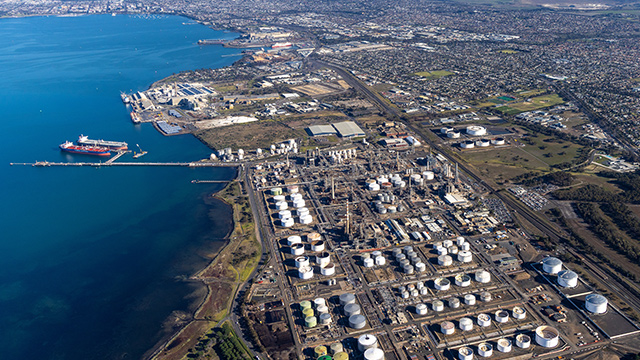
Geelong Refinery in Victoria. Image credit: Adobe Stock
Has Australia dipped into its fuel reserves before?
Yes, at the start of the war in Ukraine in 2022 Australia opened its fuel reserves, although this was deemed a precautionary measure rather than a necessity.
Once the prices stabilised these stockpiles were replenished.
Is it true some of the supply is ‘dirty fuel’?
The federal government announced on March 12 that it would allow fuel with a higher sulphur content (so-called ‘dirty fuel’ because it produces more sulphur dioxide when burnt) earmarked for export to be used in the Australian fuel supply. This fuel was in regular use in Australia until about six months ago and does not have any negative effects on a vehicle’s engine. This fuel is also blended into the broader fuel supply.
Should I buy fuel now and store it just in case?
No, panic-buying only causes additional problems (remember the hoarding of toilet paper during COVID lockdowns?). Hoarding fuel is already leading to service stations running out of supply, especially in rural areas which may only have one small station in town.
What are the pros and cons of E10 petrol?
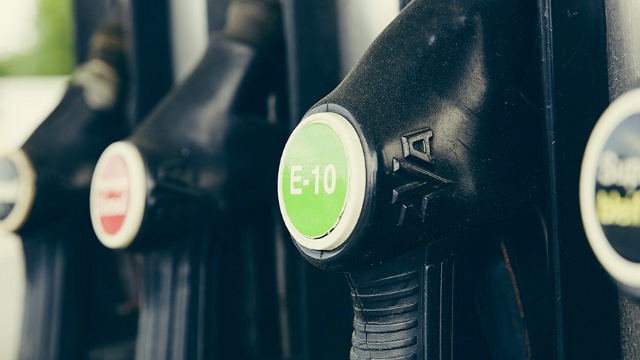
Using E10 has been a divisive topic in Australia for some years, owed in part to fears that petrol blended with ethanol was either potentially damaging to vehicles or provided lower fuel efficiency. We encourage motorists to check their vehicle's logbook advice. If the manufacturer recommends E10 is suitable for your engine, feel confident to use it as a cheaper alternative. E10 sold is 10 per cent domestically produced ethanol, which takes pressure off the supply chain.
— NRMA spokesman, Peter Khoury
Will fuel prices continue to increase in Australia?
Many factors affect how much consumers pay at the bowser. At the fuel security round table, the NRMA raised concerns about the pace of fuel price increases and lack of transparency. The same message was reiterated at the ACCC meeting.
Whether prices continue to rise will be dependent on future wholesale price movements. Long-term fuel prices depend on the situation in the Strait of Hormuz. Iran has been attacking ships, in effect closing the strait to certain nations. If this supply route continues to remain closed, it may further drive up the cost of crude oil, which will in turn affect wholesale prices in Australia and the price of fuel at the pump.
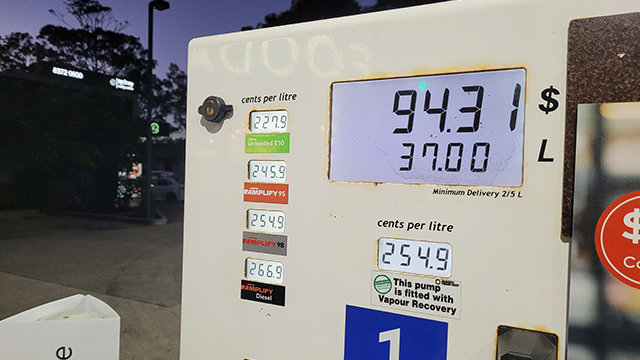
Fuel prices have risen sharply as of mid-March 2026. Image credit: The NRMA
When is the Iran conflict going to end?
The US Government said it initially anticipated a military campaign of four to six weeks in Iran, with the first strikes occurring on February 28.
“Ultimately, the operation will end when the commander in chief determines the goals have been fully realised and the threats posed by Iran have been eliminated,” White House press secretary, Karoline Leavitt told media recently.
President Donald Trump, however, has refused to commit to an end date and Iranian foreign minister Abbas Araghchi is on record as saying Iran will “continue this resistance without any hesitation."
What else to know
When will fuel prices fall?
A meaningful, sustained fall in pump prices requires either a resolution to the Middle East conflict, a significant reopening of the Strait of Hormuz, or a sharp drop in global crude demand. In the meantime, the practical advice remains to use the My NRMA app to find the cheapest servo in your area and avoid panic buying, which only accelerates price rises.
Are sudden price increases by servos legal?
Under Australian law, service stations and oil companies are permitted to set their own prices. The NRMA does not support price regulation as a general principle, as it is competition – not regulation – that keeps prices down. Motorists are encouraged to support service stations that consistently offer competitive prices, and to avoid those that do not.
Why did prices rise before wholesale costs change?
The NRMA has been unambiguous: price gouging occurred, particularly in the first week of the crisis and most visibly in Australia's three largest cities. Retail prices rose before any increase in wholesale costs, at a point in the price cycle when margins were already well above 50 cents per litre. The NRMA referred this to the ACCC and called on it to name and shame the operators responsible.
Why does regional Australia bear the brunt?
Two issues are affecting regional communities simultaneously: regional price increases and supply shortages. On price, many regional centres have actually fared better than capital cities, where the most severe increases occurred. On supply, shortages appear to be driven by a combination of panic buying and reports that independent operators are struggling to access fuel from terminals at fair prices. The NRMA is calling for both issues to be addressed.
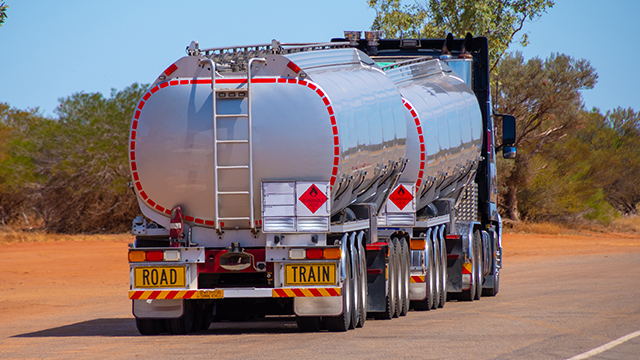
Petrol transportation and delivery of petrol across regional Australia have faced major disruptions and delays. Image credit: Adobe Stock
How can motorists report price gouging?
Excessive pricing can be reported directly to the ACCC. Motorists are also encouraged to use the My NRMA app to locate the most competitively priced service stations in their area.
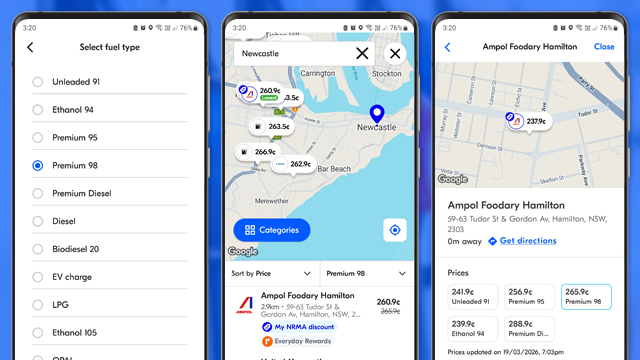
Find the latest fuel prices near you on the My NRMA app. Image credit: The NRMA
What is the NRMA doing beyond raising awareness?
The NRMA is a mutual that exists to represent the interests of our members. We are in regular communication with government regarding concerns observed both at the bowser and within the supply terminals and advocating on motorists' behalf. We are also continuing to invest in EV communications and charging infrastructure across regional Australia, recognising that the long-term answer to fuel price volatility lies in reducing dependence on oil.
Is fuel excise profiting the government during the crisis?
Fuel excise is collected at the point of sale and directed to the Federal Government, where it is intended to fund road construction and maintenance. The GST also applies to the excise itself, with the proceeds distributed to state governments. The NRMA's position is that the excise serves an important purpose, and that a greater proportion of revenue should be directed back into road infrastructure – a position it continues to advocate for with both federal and state governments.